Planning your packaging
How to Choose the Right Packaging for Your Brand
Start with your product, its journey and the details that make a useful quotation brief.
By Foldology ·
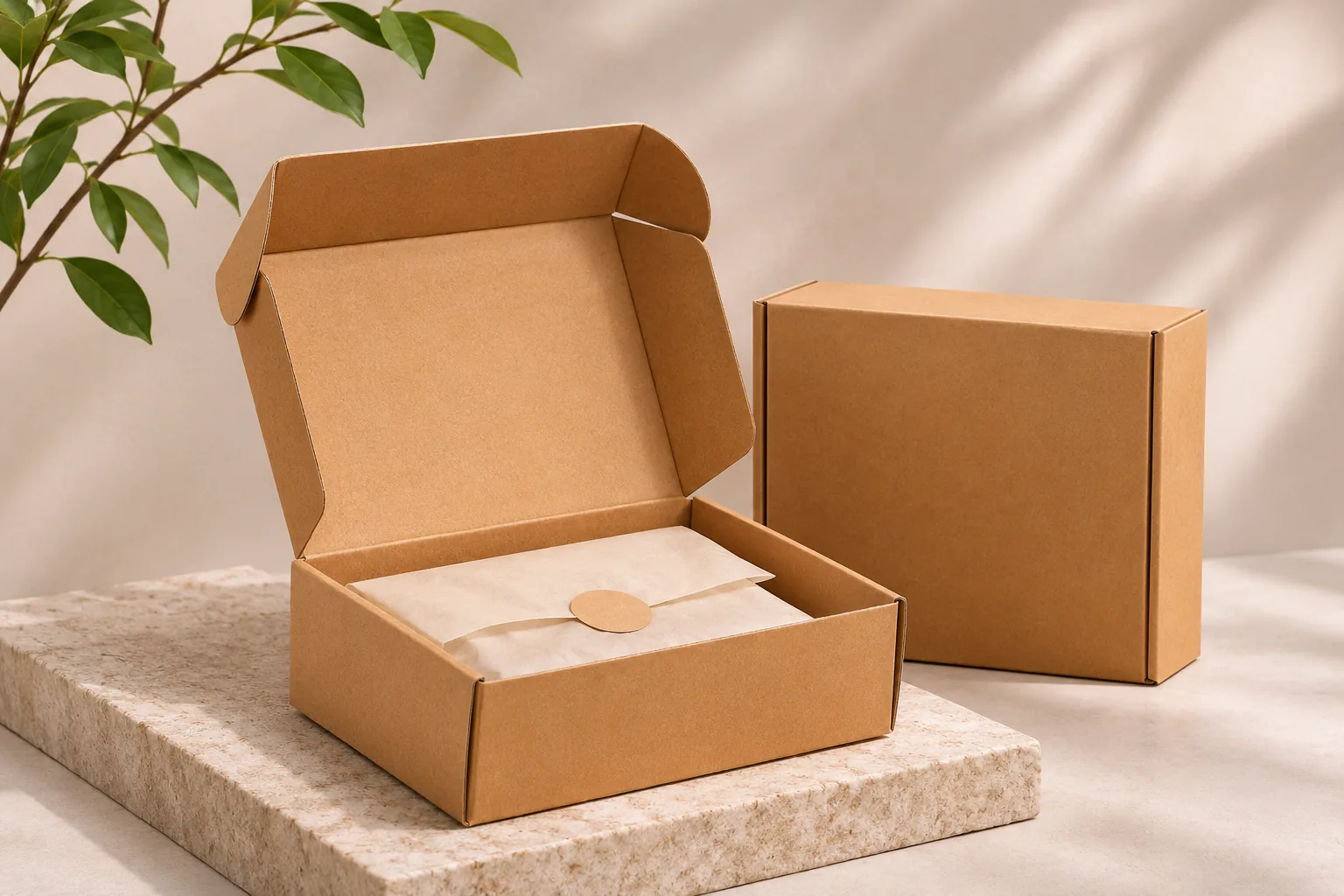
Start with what the product needs
Before choosing a colour or finish, describe the item the packaging must hold. Record its dimensions, weight, shape and any fragile or easily marked surfaces. Note whether several items travel together and whether the packaging needs an insert, separator or space for instructions. Include units with every measurement.
A useful brief distinguishes the product size from the desired internal packaging size. Allowance for protection and assembly must be reviewed rather than guessed from a photograph. If you have a sample of the product or existing packaging, discuss how it can inform that review before sending anything.
Choose a structure around the journey
Think about where the packaging will be used: a retail shelf, a gift presentation, a carrier bag or a parcel delivered to a customer. A rigid presentation box, folding carton and mailer solve different problems. A presentation box may still need a separate outer shipping pack; attractive packaging alone does not establish transit protection.
Consider opening, closing and packing as well as appearance. Who assembles the pack? How does the product go inside? Can the customer remove it comfortably? Discuss a proposed structure and the conditions it will face, then confirm suitability through production review and appropriate samples or tests.
Describe materials without assuming performance
If you have a material preference, explain why: a particular feel, appearance, stiffness or presentation. Share any product-contact requirements and storage conditions. Material names or a heavier-looking image do not prove strength, compatibility, recyclability or suitability for a specific product.
Treat technical and environmental requirements as things to verify. Ask which proposed material, construction and evidence will address your brief. Do not rely on a packaging concept to establish a food-contact property, certification or environmental claim.
Make the customer experience practical
Write down the experience you want to create: a neat first impression, a clear way to identify variants or a considered opening sequence. Then check whether the proposal also works for the people packing and storing it. A pleasing detail should not make routine handling unnecessarily awkward.
Brand consistency can come from proportion, restrained colour and clear artwork rather than many decorative finishes. Identify which details are essential and which are optional so alternatives can be discussed without losing the main idea.
Discuss print, finishes and quantity together
Provide the artwork status, intended print areas, colour references and any finish you would like considered. Availability depends on the confirmed material, construction, artwork and production review. A metallic appearance in a concept image is not confirmation that a particular foil or process is available.
State your estimated order quantity, number of sizes or designs and likely repeat requirements. Different constructions and processes have different setup and handling considerations, so compare quotations for the same defined brief. Ask which changes would affect the quotation; do not assume a universal minimum or a fixed price from an example.
Include storage and shipping in the brief
Consider the space available for empty packs and whether they arrive flat or assembled. Include the delivery area and your preferred timing, clearly marked as a requirement for review rather than an agreed delivery date. Explain any packing-line, storage or parcel-size constraints you already know.
For shipping, separate the presentation pack from the complete transit system: product, internal protection and outer packaging. Discuss validation appropriate to the real route and product. Neither a photograph nor a packaging category name guarantees delivery performance.
Send a brief that invites useful questions
A concise enquiry can include the packaging category, product dimensions and weight, estimated quantity, design or print ideas, delivery area and timing. Add the intended use and any requirements that need evidence. Photographs of the product can help explain shape, but discuss artwork and file handling first.
Foldology’s email and WhatsApp actions open your chosen application; you review and send the message there. Specifications, availability, pricing and terms need individual confirmation. Any later order requires agreed details and final-proof approval before production is authorised.
Technical options are for discussion. Availability depends on confirmed specifications and production review; this guide does not establish manufacturing capability, performance or environmental claims.
Explore related packaging